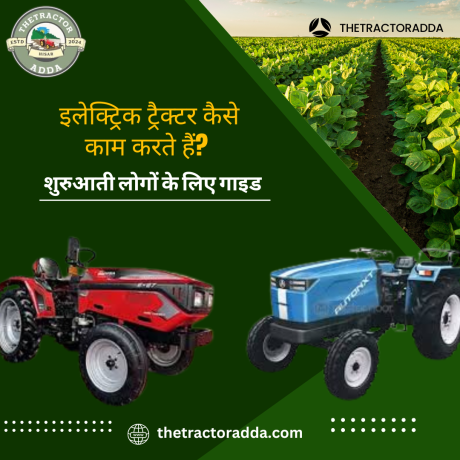
How Do Electric Tractors Work? A Beginner’s Guide
Blog Description
The agricultural industry is rapidly evolving, and one of the biggest innovations in recent years is the introduction of electric tractors. Unlike traditional diesel-powered tractors, electric tractors run on battery-powered electric motors, offering cleaner, quieter, and more efficient farming solutions. But how do these tractors actually work? Let’s break it down in this beginner’s guide!
Key Components of an Electric Tractor
To understand how an electric tractor functions, let’s first look at its main components:
1. Battery Pack ????
- Acts as the primary energy source, replacing diesel fuel.
- Usually made of lithium-ion or lead-acid batteries.
- Stores and supplies power to the electric motor.
2. Electric Motor ⚙️
- Converts electrical energy from the battery into mechanical power.
- Provides instant torque, making electric tractors highly efficient.
- Requires minimal maintenance compared to internal combustion engines.
3. Powertrain & Transmission ????
- Many electric tractors use a direct drive system, eliminating the need for complex gear transmissions.
- Some models include regenerative braking, which recharges the battery when the tractor slows down.
4. Controller & Software System ????️
- Regulates the power flow between the battery and motor.
- Uses AI and IoT for precision farming and smart automation.
- Can be connected to mobile apps for real-time monitoring.
5. Charging System ⚡
- Can be charged using a standard electric outlet or fast-charging stations.
- Some models feature solar charging capabilities, making them even more sustainable.
How Does an Electric Tractor Work?
The working principle of an electric tractor can be understood in a few simple steps:
- Charging the Battery: The tractor is plugged into a charging station to store energy in its battery pack.
- Power Distribution: Once turned on, the battery sends electricity to the electric motor.
- Motor Activation: The electric motor converts this energy into mechanical power, which drives the tractor.
- Smooth & Efficient Operation: The tractor moves forward, operating attachments such as plows, tillers, and loaders with instant torque and minimal noise.
- Energy Regeneration: Some advanced models use regenerative braking to recover and store energy during operations.
Benefits of Electric Tractors
Electric tractors are gaining popularity due to their numerous advantages over traditional diesel models:
✅ Lower Operating Costs: No fuel expenses and minimal maintenance.
✅ Eco-Friendly Farming: Zero emissions help reduce the carbon footprint.
✅ Quieter Operations: Ideal for working in noise-sensitive environments.
✅ High Torque Performance: Instant power delivery enhances efficiency.
✅ Government Incentives: Many countries, including India, offer subsidies on electric farm equipment.
Challenges & Limitations
Despite their advantages, electric tractors still face some challenges:
⚠️ Battery Life & Charging Time: Limited runtime compared to diesel tractors.
⚠️ High Initial Cost: The upfront investment is higher, although long-term savings offset it.
⚠️ Charging Infrastructure: Availability of fast-charging stations in rural areas is still developing.
The Future of Electric Tractors in Farming
With advancements in battery technology and renewable energy integration, electric tractors are set to revolutionize the farming industry. Many leading brands, including John Deere, Monarch, and Escorts, are already launching next-gen electric models to enhance agricultural efficiency.